
Branching Scenario Learning
Select the image to open the course in a new tab.
Design Thinking Certification
This is an excerpt of two courses from a 10-course certification. I wrote the content and guided the designer in the course build. The courses were created by Brittany Graves in Articulate Rise with embedded Storyline and video components.
The Challenge
Create a certification series to teach the processes and advantages of Design Thinking to teams and leaders that use traditional design processes.
The Learners
The certification is created for executives, designers, and team leaders.
The Design Strategy
While this topic does contain knowledge-level content, it is more focused on process and skill acquisition. When you teach someone to do something, they should do it, not just hear about it. So, beyond typical knowledge check questions, I wrote components that immerse the learner in application or reflection. In the Iterate and Refine lesson in this sample, I wrote a branching scenario experience that takes the learner through a series of decisions and outcomes in a design thinking process.
Just like real life, the experience is structured around several choices on a spectrum of better to worse, instead of clear right and wrong answers. Learners evaluate the scenario, make decisions, and see the outcome of their choices. Sometimes they fail and start over, other times, they experience setbacks and loop back to earlier steps. The goal of the experience is to reflect on the decision making process and the emotional journey of a non-linear design process to better understand how the steps fit within the larger workflow.
Watch a video of the gameplay.
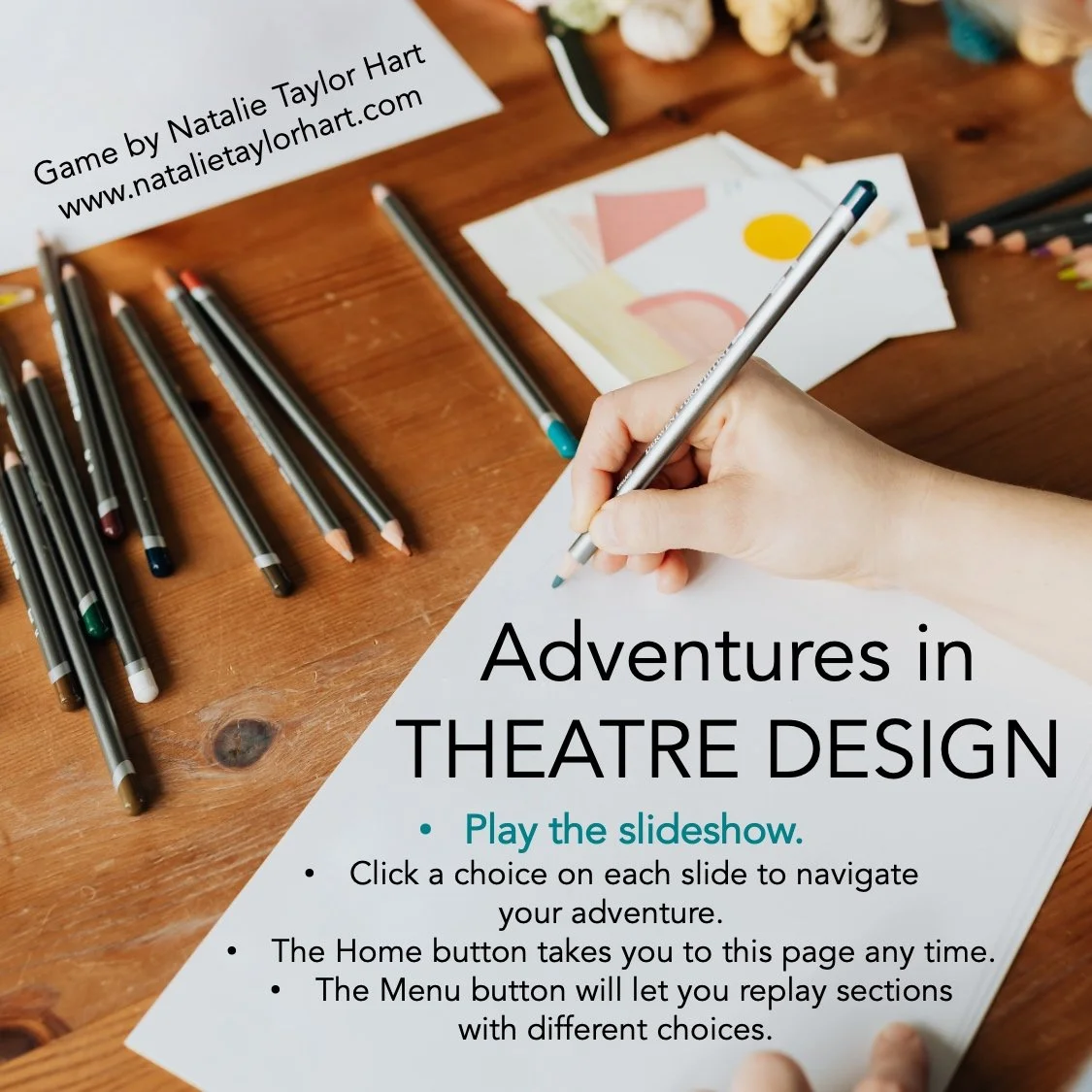
Adventures in Theatre Design Powerpoint Game
This branching scenario project looks at a similar design process for a different audience and influenced the creation of the course above. I wrote and built this learning experience.
The Challenge
Create a learning experience that helps college students to understand the implementation of a non-linear design process beyond the individual steps. Learners don’t connect the steps of the theatre design process with the decision-making involved in navigating the steps. This game leads them through a simulation of the Design Process to integrate cognitive understanding of the steps with affective attitudes and critical thinking.
The Learners
College undergraduates majoring in Theatre Design and Technology
The Design Strategy
This game used branching scenarios to lead students through a hypothetical theatre design process. The game incorporates some choices that have unequal options and some neutral options. After completing the process to an approved design, the Wheel of Chaos introduces real-world problems into the simulation.
The Experience
Learners played through the game at least two times and articulated their experiences in a discussion forum. Many comments focused on how the process felt very different from the way that they imagined it to be after learning the steps.
The Outcome
The game was designed to be fun and motivating while providing a lens inside the design process. Students who played this game noted nuanced new realizations about the need for incubation time, the utility of research, the non-linear nature of the process, and communication with collaborators.
Technology
Powerpoint
Photoshop
Audacity